
When it comes to the world of technology, two key players stand out: cloud computing and mobile computing. These innovative concepts have revolutionized the way we interact with data and information, offering a seamless and efficient experience for users. Let’s dive into the fascinating realm where the clouds meet mobility!
In the following paragraphs, we will explore the ins and outs of cloud computing and mobile computing, uncovering their unique features, benefits, and interconnected nature. Get ready to embark on a captivating journey through the digital landscape!
Cloud Computing
Cloud computing is the delivery of computing services, including servers, storage, databases, networking, software, and analytics, over the internet. This allows individuals and businesses to access resources and applications without the need for on-premises infrastructure.
Key Benefits of Cloud Computing
- Cost-Efficiency: Cloud computing eliminates the need for costly hardware and maintenance, allowing businesses to pay only for the resources they use.
- Scalability: Users can easily scale their resources up or down based on demand, ensuring they have the necessary computing power at all times.
- Flexibility: Cloud computing offers the flexibility to access files and applications from any device with an internet connection, enabling remote work and collaboration.
- Automatic Updates: Cloud providers handle software updates and maintenance, ensuring that users always have access to the latest features and security patches.
Types of Cloud Computing Services
- Infrastructure as a Service (IaaS): Provides virtualized computing resources over the internet, including virtual servers, storage, and networking.
- Platform as a Service (PaaS): Offers a platform allowing developers to build, deploy, and manage applications without worrying about infrastructure.
- Software as a Service (SaaS): Delivers software applications over the internet on a subscription basis, eliminating the need for installation and maintenance.
Popular Cloud Computing Providers
- Amazon Web Services (AWS): A comprehensive cloud computing platform offering a wide range of services and solutions for businesses of all sizes.
- Microsoft Azure: Microsoft’s cloud computing service providing a variety of tools and services for building, deploying, and managing applications.
- Google Cloud Platform: Google’s suite of cloud computing services, including computing, storage, and data analytics, designed to help businesses innovate and scale.
Mobile Computing
Mobile computing refers to the use of portable devices, such as smartphones and tablets, to access and process information on the go. It has become increasingly significant in today’s digital age, allowing users to stay connected and productive regardless of their location.
Evolution of Mobile Computing
Mobile computing has evolved significantly over the years, starting from basic mobile phones with limited functionality to the sophisticated smartphones we have today. The introduction of mobile apps, high-speed internet connectivity, and cloud services has revolutionized the way we use mobile devices for communication, entertainment, and work.
Comparison with Traditional Computing
Portability
Mobile computing devices are portable and can be carried anywhere, unlike traditional desktop computers.
Connectivity
Mobile devices rely on wireless networks for internet access, while traditional computers often use wired connections.
User Interface
Mobile devices typically have touchscreens and intuitive interfaces, while traditional computers may use keyboards and mice for input.
Processing Power
Traditional computers generally have more processing power and storage capacity compared to mobile devices.
Challenges in Mobile Computing
- Security: Mobile devices are more vulnerable to security threats such as malware and data breaches.
- Compatibility: Ensuring that mobile apps work seamlessly across different devices and platforms can be a challenge.
- Battery Life: Mobile devices have limited battery life, which can impact usability, especially when on the go.
- Screen Size: The smaller screen size of mobile devices can be a limitation when it comes to viewing and interacting with content.
Relationship between Cloud Computing and Mobile Computing
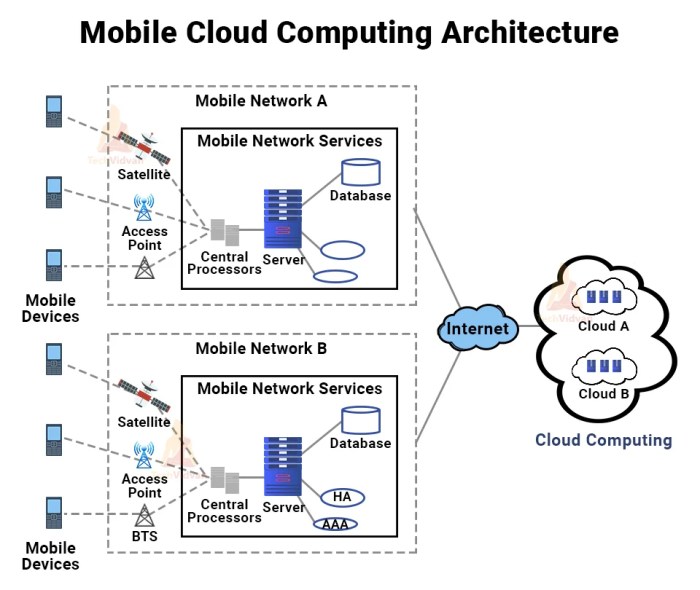
Cloud computing and mobile computing are highly interconnected technologies that work hand in hand to provide seamless and efficient solutions for users. Cloud computing involves storing and accessing data and applications over the internet, while mobile computing enables users to access these resources on the go through mobile devices like smartphones and tablets.When combined, cloud computing and mobile computing offer numerous advantages, such as increased storage capacity, enhanced collaboration, improved flexibility, and scalability.
By leveraging the power of the cloud, mobile devices can access a vast amount of data and computing resources without being limited by their own storage capacity or processing power.
Advantages of combining Cloud and Mobile Computing
- Enhanced storage capacity and accessibility
- Improved collaboration and communication
- Increased flexibility and scalability
- Cost-effective solutions for businesses and individuals
Applications leveraging both Cloud and Mobile Technologies
- Cloud storage services like Google Drive and Dropbox accessible on mobile devices
- Collaborative tools like Google Docs and Microsoft Office 365 for mobile work on the go
- Mobile banking applications securely accessing cloud-based financial data
Impact of Cloud Computing on Mobile App Development
Cloud computing has revolutionized mobile app development by providing developers with powerful backend infrastructure and services. Developers can leverage cloud resources to store data, perform complex computations, and deliver real-time updates to users without overloading the mobile device. This has led to the development of more sophisticated and feature-rich mobile apps that offer seamless user experiences.
Emotional Freedom Technique (EFT)
Emotional Freedom Technique (EFT) is a therapeutic technique that aims to address emotional distress by tapping on specific meridian points on the body. The purpose of EFT is to help release negative emotions, reduce anxiety, and promote overall emotional well-being.EFT is based on the principles of traditional Chinese medicine and the belief that imbalances in the body’s energy system can contribute to emotional and physical issues.
By tapping on these meridian points while focusing on a specific issue, individuals can help restore balance to their energy system and alleviate emotional discomfort.
Benefits of Practicing EFT
- Reduces stress and anxiety levels
- Improves emotional well-being
- Helps release negative emotions and trauma
- Can be used for pain management
- Enhances overall mental health
Scenarios where EFT can be Effective
- Before a job interview to reduce nervousness and boost confidence
- When experiencing overwhelming emotions such as anger or sadness
- To address phobias and fears
- For dealing with past trauma and emotional wounds
- As a tool for managing chronic pain
Final Review
As we wrap up our exploration of cloud computing and mobile computing, it’s clear that these technologies are not just trends but essential components of our digital world. By understanding their relationship and potential, we can harness their power to drive innovation and connectivity to new heights. So, embrace the cloud and embrace mobility for a future full of endless possibilities!
FAQ Corner
How are cloud computing and mobile computing related?
Cloud computing and mobile computing are interconnected as cloud services enable mobile devices to access data and applications from anywhere, providing seamless connectivity.
What are the advantages of combining cloud and mobile computing?
Combining cloud and mobile computing results in increased flexibility, scalability, and accessibility for users, allowing for real-time collaboration and data sharing.
Can you provide examples of applications that leverage both cloud and mobile technologies?
Popular examples include cloud storage services like Dropbox or Google Drive, which allow users to access and sync files across multiple devices using mobile apps.


