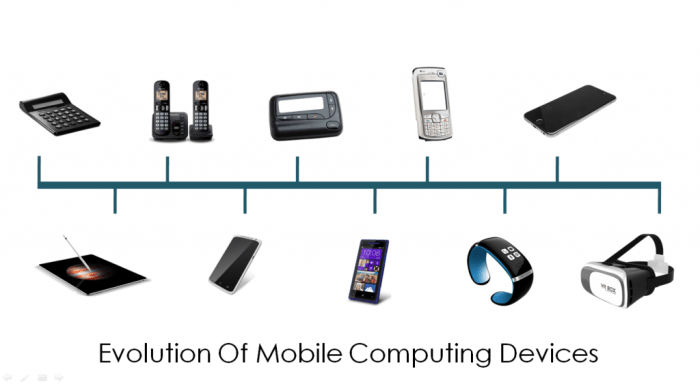
Step right up, tech enthusiasts! Get ready to dive into the exciting realm of mobile computing hardware advancements. From blazing-fast processors to cutting-edge display technology, this topic is sure to captivate your interest and expand your tech knowledge horizons.
Let’s embark on a thrilling journey through the evolution of mobile processors, the impact of battery advancements, and the innovative materials shaping the devices we can’t live without.
Mobile Computing Hardware Advancements
Mobile processors have come a long way since the early days of mobile computing. As technology has advanced, processors have become more powerful and energy-efficient, allowing for faster and smoother performance on mobile devices.
Evolution of Mobile Processors
- Early mobile processors were simple and limited in their capabilities, often struggling to handle basic tasks.
- With advancements in semiconductor technology, mobile processors have become smaller, faster, and more energy-efficient.
- Multi-core processors have become the norm, allowing for better multitasking and improved performance.
- Recent developments in artificial intelligence have led to the integration of AI processing units in mobile processors, enhancing features like facial recognition and voice commands.
Impact of Advancements in Battery Technology
- Advancements in battery technology have significantly improved the battery life of mobile devices, allowing users to go longer between charges.
- Lithium-ion batteries have become the standard in mobile devices due to their high energy density and rechargeable nature.
- New technologies like fast charging and wireless charging have made it more convenient for users to keep their devices powered up throughout the day.
Innovative Materials in Mobile Device Manufacturing
- Glass and metal have traditionally been used in mobile device manufacturing for their durability and premium feel.
- New materials like ceramic and carbon fiber are being explored for their lightweight properties and unique aesthetic appeal.
- Flexible and foldable displays are made possible by innovative materials like OLED panels and polymer substrates, allowing for new form factors in mobile devices.
Mobile Device Displays
Mobile device displays have evolved significantly over the years, moving from LCD to OLED and AMOLED technologies. These advancements have brought about improvements in display quality, energy efficiency, and overall user experience.
Progression from LCD to OLED and AMOLED Displays
The shift from LCD to OLED and AMOLED displays in mobile devices has revolutionized the way we interact with our smartphones and tablets. OLED (Organic Light Emitting Diode) technology offers better color reproduction, deeper blacks, and improved contrast ratios compared to traditional LCD displays. On the other hand, AMOLED (Active Matrix Organic Light Emitting Diode) displays take it a step further by incorporating a thin-film transistor for each individual pixel, resulting in faster response times and even better image quality.
Benefits of Higher Refresh Rates
Higher refresh rates in mobile displays, such as 90Hz or 120Hz, provide smoother animations and scrolling, reducing motion blur and making interactions feel more fluid. This is especially beneficial for gamers and users who consume a lot of multimedia content on their devices.
Advancements in Foldable and Flexible Display Technology
Foldable and flexible display technology has opened up new possibilities for mobile devices, allowing for innovative form factors and enhanced portability. Devices like foldable smartphones and tablets provide users with larger screen real estate in a compact form factor, while flexible displays pave the way for curved screens and unique design options.
Mobile Device Cameras
Mobile device cameras have seen significant advancements in recent years, with manufacturers continuously improving image sensors and camera technologies to enhance the photography experience for users. These advancements have not only improved the quality of images captured on smartphones but have also introduced innovative features that leverage artificial intelligence (AI) and computational photography techniques.
Improvements in Image Sensors
- Manufacturers have been focusing on increasing the resolution of image sensors to capture more detail in photos.
- Improvements in sensor size and pixel technology have led to better low-light performance, reducing noise and improving overall image quality.
- Introduction of multi-camera setups with different focal lengths allows for versatile photography options, such as wide-angle and telephoto shots.
AI Features in Mobile Photography
- AI-powered features like scene recognition, portrait mode, and night mode enhance the camera capabilities by automatically adjusting settings for optimal results.
- Smartphones use AI algorithms to detect faces, objects, and scenes, enabling features like automatic focus tracking and background blur effects.
- AI-driven image processing improves image quality by enhancing colors, reducing noise, and optimizing exposure levels.
Impact of Computational Photography
- Computational photography techniques, such as HDR (High Dynamic Range) and image stacking, combine multiple images to create a single high-quality photo with improved dynamic range and detail.
- Software enhancements like Smart HDR and Night Sight use computational photography to produce stunning images in challenging lighting conditions.
- Advancements in image processing algorithms have enabled features like real-time bokeh effects, image stabilization, and advanced editing tools directly on mobile devices.
Connectivity and Networking
Mobile computing has seen significant advancements in connectivity and networking technologies, enabling users to stay connected wherever they go. From the transition to 5G to the evolution of Wi-Fi standards and improvements in Bluetooth technology, these developments have revolutionized the way we use our mobile devices.
Transition to 5G
The transition to 5G, the fifth generation of mobile networks, has brought about a new era of connectivity for mobile computing. With faster speeds, lower latency, and increased capacity, 5G networks provide users with a seamless and reliable connection for streaming, gaming, video calls, and more. The implications of 5G for mobile computing are vast, opening up possibilities for new applications and services that were previously not feasible with older network technologies.
- 5G enables faster download and upload speeds, making it easier to access and share large files on the go.
- Lower latency in 5G networks allows for real-time interactions, enhancing the user experience for applications like augmented reality and virtual reality.
- The increased capacity of 5G networks supports a larger number of connected devices, paving the way for the Internet of Things (IoT) to thrive.
Evolution of Wi-Fi Standards
Wi-Fi standards have also evolved to meet the demands of mobile computing. From the early days of 802.11b to the latest Wi-Fi 6 (802.11ax) standard, each iteration has brought improvements in speed, range, and efficiency. Mobile devices now support faster Wi-Fi connections, enabling users to stay connected to high-speed networks in various environments.
- Wi-Fi 6 offers increased data rates, improved performance in crowded environments, and better power efficiency, enhancing the overall Wi-Fi experience for users.
- With features like Orthogonal Frequency Division Multiple Access (OFDMA) and Target Wake Time (TWT), Wi-Fi 6 optimizes network efficiency and reduces latency for a smoother wireless experience.
Advancements in Bluetooth Technology
Bluetooth technology has also seen advancements to provide seamless connectivity between mobile devices and other peripherals. The latest Bluetooth standards, such as Bluetooth 5.2, offer improved speed, range, and reliability for a wide range of applications, including wireless audio, wearable devices, and smart home automation.
- Bluetooth 5.2 introduces features like LE Audio for high-quality audio streaming, Enhanced Data Channels for faster data transfer, and improved coexistence with other wireless technologies for a more stable connection.
- With advancements in Bluetooth technology, users can easily connect their mobile devices to Bluetooth headphones, speakers, smartwatches, and other accessories without any hassle, enhancing the overall user experience.
Security in Mobile Computing
Mobile computing has brought about a myriad of conveniences, but it also raises concerns about security. As our devices store sensitive information and personal data, it is crucial to understand the advancements in security measures to protect users from potential threats.
Biometric Security Features
Biometric authentication has become increasingly popular on mobile devices, offering a more secure and convenient way to unlock your phone or authenticate transactions. Features such as fingerprint scanners, facial recognition, and iris scanning provide a unique and reliable method to verify the user’s identity, making it difficult for unauthorized access.
Hardware-Level Encryption
Hardware-level encryption plays a vital role in safeguarding sensitive data stored on mobile devices. By encrypting data at the hardware level, information is scrambled and can only be accessed with the correct decryption key. This adds an extra layer of protection, ensuring that even if the device is lost or stolen, the data remains inaccessible to unauthorized users.
Mobile Processors and User Privacy
Mobile processors are not just improving performance but also enhancing security measures to protect user privacy. Advanced processors now come equipped with security features such as secure boot, secure enclave, and trusted execution environments, which help prevent unauthorized access and ensure that sensitive data is kept safe from potential threats.
Emotional Freedom Technique
Emotional Freedom Technique (EFT) is a form of psychological acupressure that involves tapping on specific meridian points on the body while focusing on a negative emotion or thought. This technique is based on the principles of traditional Chinese medicine and modern psychology, aiming to release emotional blockages and promote emotional well-being.
Real-Life Examples of EFT Benefits
- One individual used EFT to relieve anxiety before public speaking engagements, allowing them to feel more confident and composed.
- Another person found relief from chronic stress by incorporating EFT into their daily routine, leading to a significant reduction in overall anxiety levels.
- A mother used EFT to manage feelings of overwhelm and frustration, resulting in a greater sense of calm and patience in her daily interactions with her children.
Benefits of Incorporating EFT into Daily Routines
- Improved Emotional Well-Being: By regularly practicing EFT, individuals can experience reduced stress, anxiety, and negative emotions, leading to a more balanced emotional state.
- Enhanced Resilience: EFT can help individuals build emotional resilience and cope better with life’s challenges and setbacks.
- Increased Self-Awareness: Through the practice of EFT, individuals can develop a deeper understanding of their emotions and thought patterns, leading to greater self-awareness and personal growth.
Final Thoughts
As we wrap up our exploration of mobile computing hardware advancements, remember that the future of tech is in constant motion. Stay tuned for more innovations and breakthroughs that will continue to shape the way we interact with our devices every day.
Quick FAQs
How have mobile processors evolved over the years?
Mobile processors have evolved from single-core to octa-core designs, offering increased performance and efficiency.
What are the benefits of higher refresh rates in mobile displays?
Higher refresh rates provide smoother animations, reduced motion blur, and an overall improved user experience.
How do biometric security features enhance mobile device security?
Biometric security features like fingerprint scanners and facial recognition add an extra layer of protection to devices, ensuring secure access.


